

Introduction to Doge Software Licenses Audit HUD
The Doge Software Licenses Audit HUD represents a pivotal advancement in the management and oversight of software licenses within the growing digital landscape. As businesses increasingly rely on various software applications, the need for efficient tracking and compliance has become paramount. The primary purpose of the Doge Software Licenses Audit HUD is to streamline the auditing process, facilitating a thorough evaluation of software usage against respective licensing agreements. Its significance lies in ensuring that organizations maintain compliance with licensing terms, thereby avoiding legal repercussions and optimizing resource allocation.
Blockchain technology has emerged as a transformative force within the software licensing domain, enhancing the transparency and security of transactions. Doge, as a blockchain framework, integrates seamlessly into software license management, offering immutable records that can effectively demonstrate compliance over time. This capability not only simplifies audits but also instills confidence among stakeholders regarding software usage integrity. The unique properties of blockchain, such as decentralization and cryptographic security, provide a robust foundation for the Doge Software Licenses Audit HUD, making it an invaluable tool for modern enterprises.
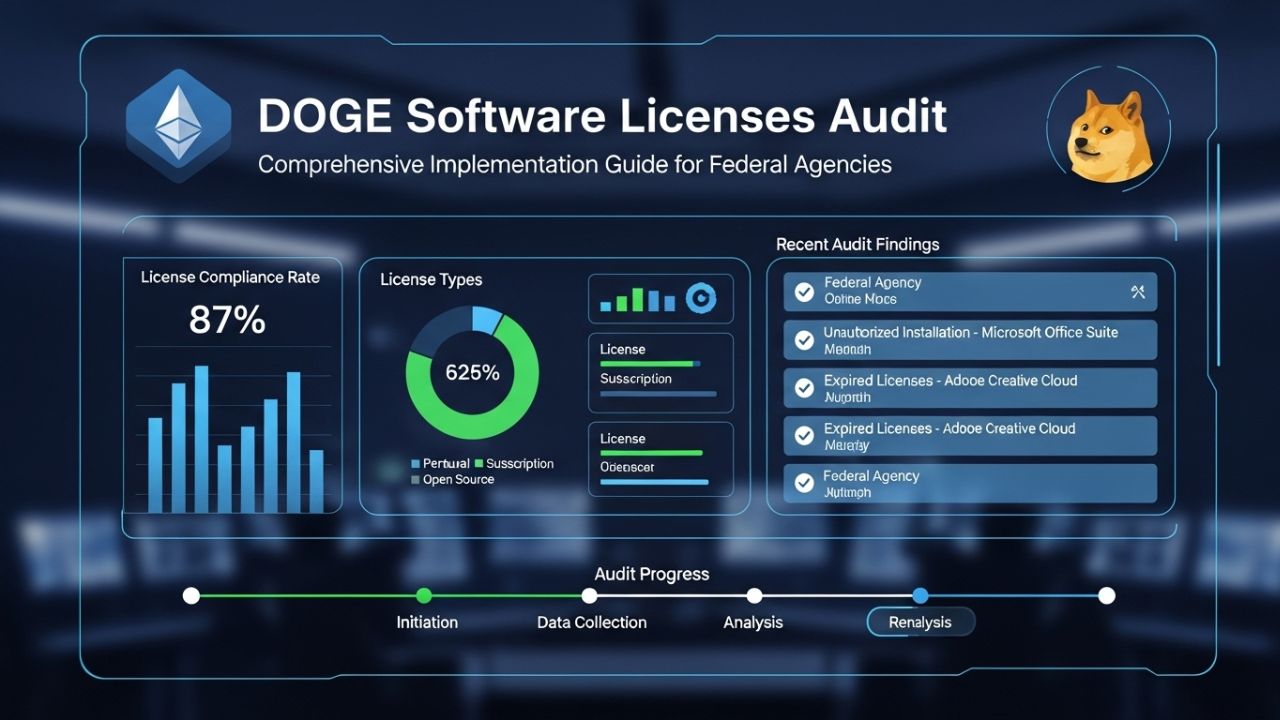
The acronym ‘HUD’ stands for Heads-Up Display, a concept traditionally associated with user interfaces that provide real-time data in a user-friendly format. In the context of software audits, the HUD serves as an interactive dashboard that presents critical information related to software licenses, thereby empowering organizations to make informed decisions. By harnessing the capabilities of the Doge Software Licenses Audit HUD, businesses can gain immediate insights into their software licenses, track compliance status, and identify potential areas for improvement. This comprehensive overview establishes a solid framework for understanding the ensuing discussions surrounding the functionalities and benefits of the Doge Software Licenses Audit HUD.
Benefits of Using Doge Software Licenses Audit HUD
The Doge Software Licenses Audit HUD offers several advantages that are crucial for organizations aiming to optimize their software asset management processes. One of the primary benefits is the enhanced visibility into software usage across an organization. By utilizing this tool, IT departments can gain insights into which software applications are actively being used, how frequently they are accessed, and whether they are licensed properly. This level of visibility is indispensable for making informed decisions regarding software procurement and usage.
Another significant benefit of the Doge Software Licenses Audit HUD is streamlined license compliance. Managing software licenses can be complex, especially in large organizations with a diverse set of applications. The HUD simplifies compliance processes by providing comprehensive reports and dashboards that highlight compliance status. This proactive approach to compliance can help organizations avoid costly penalties associated with license violations, thereby fostering a more compliant operating environment.
Cost-effectiveness is another compelling reason organizations should consider the Doge Software Licenses Audit HUD. By identifying underutilized or unnecessary software licenses, organizations can reduce their software expenditures. Additionally, the tool’s capabilities enable IT departments to right-size their software inventories, ensuring that they only pay for what they need. This financial prudence aligns with broader organizational goals of cost reduction and efficiency.
Furthermore, employing the Doge Software Licenses Audit HUD can significantly mitigate risks associated with license violations. It equips businesses with the ability to monitor their software environment actively, thus detecting any instances of unauthorized or unlicensed software use. This vigilance not only safeguards against potential legal repercussions but also enhances the organization’s overall software asset management processes, making the HUD an essential tool for any IT department aiming to maximize the value of their software investments.
How to Implement Doge Software Licenses Audit HUD
Implementing the Doge Software Licenses Audit HUD within an organization involves a series of detailed steps that ensure a smooth transition and optimal functionality. The first step in this process is to assess the system requirements to determine if the existing IT infrastructure is compatible with the HUD. Minimum requirements typically include a stable operating system, adequate memory, sufficient disk space, and a reliable database server.
Once the system requirements are confirmed, the next step is to proceed with the installation procedure. Download the latest version of the Doge Software Licenses Audit HUD from the official website or authorized distributors. Follow the installation wizard, which will guide you through the configuration options, allowing the customization of various parameters to suit your organizational needs.
After installation, configuring the HUD is crucial for ensuring accurate license management and compliance monitoring. During this setup, it is essential to establish data connections with existing software asset management systems. This integration allows for real-time tracking of software license usage and compliance. It may require the input of current license metrics, linking assets to specific licenses, and setting up notifications for license renewals.
Best practices suggest conducting a thorough test run after initial setup to identify potential issues and rectify them before going live. Monitoring the performance during this phase can also reveal insights into how well the HUD functions within your existing ecosystem. Organizations like XYZ Corp. have demonstrated successful implementations by adhering to these practices, which not only streamlined their licensing processes but also improved overall compliance.
In conclusion, implementing the Doge Software Licenses Audit HUD involves careful planning and execution. By following the outlined steps and best practices, organizations can ensure a successful deployment of this vital tool, paving the way for effective software asset management and compliance adherence.
Future of Doge Software Licenses Audit HUD
The future of the Doge Software Licenses Audit HUD appears promising, with numerous technological advancements on the horizon. As organizations increasingly prioritize software compliance and license management, the demand for sophisticated auditing tools, such as the Doge Software Licenses Audit HUD, will likely escalate. This growth can be attributed to more stringent regulations and evolving software licensing norms that require robust oversight of software usage.
One significant area of development is the integration of machine learning and artificial intelligence. These technologies are expected to enhance the efficacy of the Doge Software Licenses Audit HUD by automating data analysis and detecting patterns that may otherwise go unnoticed. By leveraging AI, the HUD may be capable of predicting potential compliance risks based on historical data, allowing organizations to take proactive measures. Furthermore, the HUD might also evolve to offer real-time reporting and insights, significantly improving decision-making processes related to software licensing.
In addition to AI advancements, the potential for increased user customization will likely become a focal point for future iterations of the Doge Software Licenses Audit HUD. Enhanced user interfaces, adaptable reporting features, and improved integration with existing enterprise systems may be introduced to streamline user experience and enhance overall functionality. Such enhancements will facilitate easier navigation through complex license agreements and provide organizations with tailored recommendations based on their software usage patterns.
As the landscape of software audits continues to shift, the Doge Software Licenses Audit HUD must remain adaptive and innovative. Anticipating changes in compliance requirements and adapting to emerging technologies will be essential for maintaining its relevance within the industry. Ultimately, the evolution of the Doge Software Licenses Audit HUD will play a crucial role in shaping effective software asset management strategies in the years to come.

